

Richard Feynman, often referred to as “the greatest mind since Einstein,” was an American physicist whose groundbreaking contributions to quantum electrodynamics and quantum physics forever altered our understanding of the universe. More on manhattan1.one.
Born in 1918 in New York City, Feynman displayed extraordinary talent in mathematics and science from an early age. Although his initial interest was in electrical engineering, he eventually found his true calling in physics, earning a PhD at Princeton University.
In 1939, as a 21-year-old graduate student, Feynman presented his first scientific paper at a seminar at Princeton. The audience, which included Albert Einstein, Wolfgang Pauli, and John von Neumann, immediately recognized his brilliance.
Feynman had a unique ability to explain complex scientific concepts in simple, accessible language. His lectures and books, such as The Feynman Lectures on Physics, became legendary, inspiring generations of students and scientists.
In addition to his theoretical achievements, Feynman was known for his problem-solving skills and unconventional approach to scientific challenges. His ingenuity and insight led to breakthroughs in various fields, from quantum electrodynamics to particle physics.
In 1965, Feynman was awarded the Nobel Prize in Physics for his “fundamental work in quantum electrodynamics.” He remained an active scientist until his death in 1988, leaving behind a rich legacy that continues to influence physicists and thinkers worldwide.
Making One of the Toughest Decisions of His Life
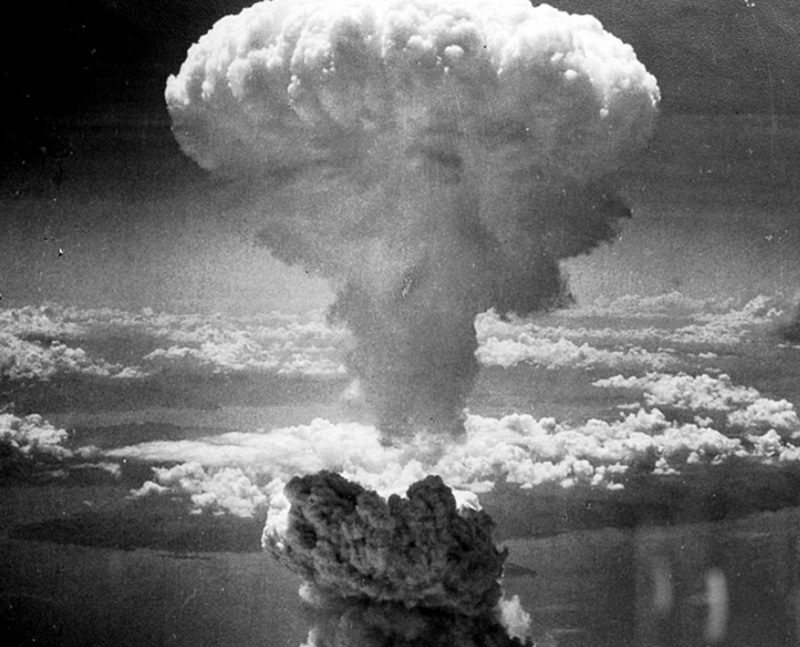
In 1941, as a graduate student at Princeton, Feynman was invited to join uranium research that could potentially lead to the development of an atomic bomb. Initially, he wanted to decline, as he was close to completing his dissertation.
However, realizing the horrors of World War II and the potential threat posed by Nazi Germany, Feynman reconsidered. He understood that the development of atomic weapons by Germany could have catastrophic consequences and was determined to do everything possible to prevent that.
Accepting the offer, Feynman worked on theoretical calculations related to uranium-235, a critical component of the atomic bomb. Meanwhile, his advisor, John Wheeler, joined the Metallurgical Laboratory at the University of Chicago in early 1942 to lead the bomb development project.
That same year, Feynman defended his doctoral dissertation under the supervision of Eugene Wigner, one of the leading scientists of the Manhattan Project.
Thus, Feynman, who was initially reluctant to participate in the development of atomic weapons, became one of the key contributors to creating this destructive technology, driven by patriotism and fear of the Nazi threat.
A Key Player in the Development of the Atomic Bomb
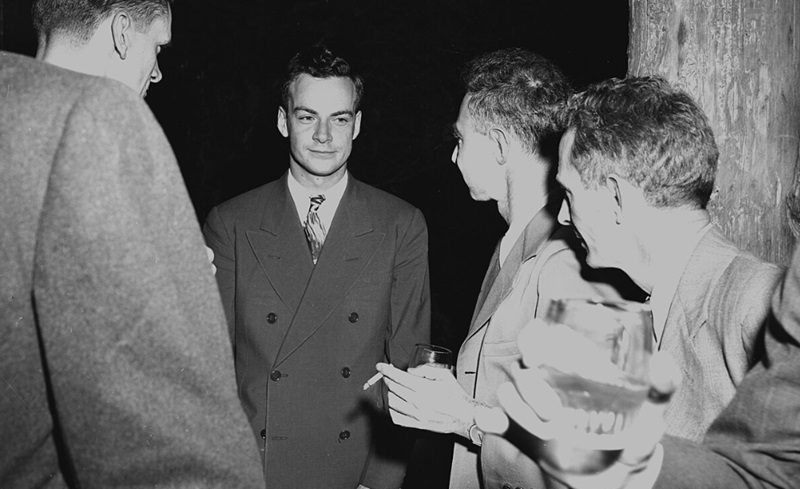
In early 1943, Edwin McMillan, Robert Oppenheimer’s assistant in establishing the Los Alamos weapons laboratory, invited Feynman to join the project. Feynman became one of the laboratory’s first employees.
On April 2, he attended a planning board meeting, where the discussions primarily revolved around organizing the laboratory and staff logistics rather than technical matters.
Feynman was assigned to Hans Bethe’s theoretical division (T-Division). Despite being a “junior physicist” among scientific giants (“Los Alamos from Below,” as he humorously described his position), the 25-year-old Feynman impressed Bethe so much that he appointed him as the leader of a four-person group.
Initially, Feynman worked on uranium hydride calculations, but over the next two years, he contributed to various aspects of bomb design and functionality. His tasks included calculations on efficiency, critical mass, implosion dynamics, and neutron diffusion.
Feynman proved to be a brilliant theorist and an invaluable member of the team, making significant contributions to the atomic bomb’s development.
A Breakthrough in Calculating the Bomb’s Efficiency
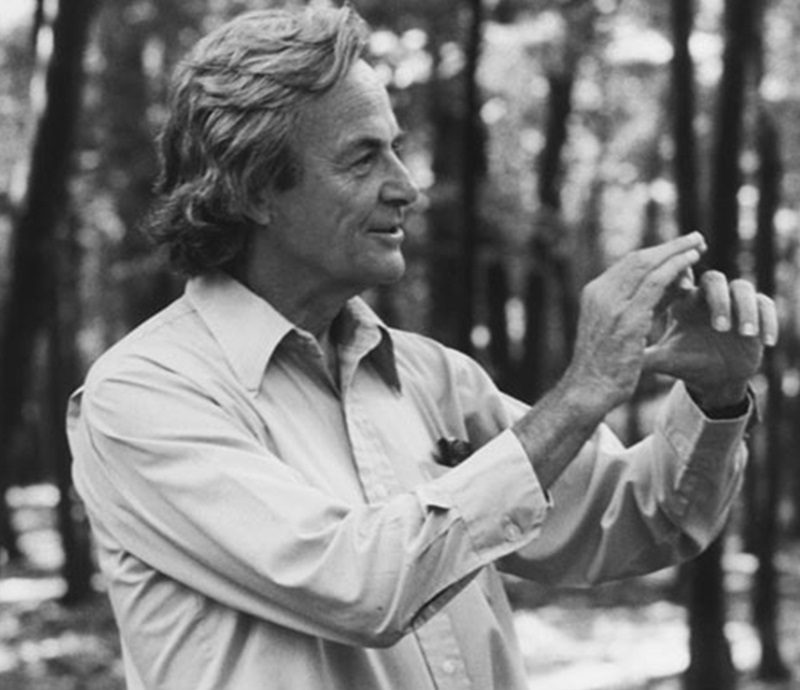
One of the most challenging aspects of developing the atomic bomb was accurately calculating its efficiency, which depended on the behavior of the assembly during detonation. A breakthrough in this area occurred early in the Manhattan Project.
One evening in April 1943, following Robert Serber’s lectures on efficiency, Hans Bethe and Richard Feynman stayed late discussing the topic.
Unable to solve the complex diffusion and hydrodynamic equations for supercritical systems, they searched for alternative approaches.
“I think we guessed,” Bethe later recalled, “that the rate of multiplication decrease during expansion, if the initial and final points of expansion are known, would be proportional to the relative expansion.”
Using Serber’s results for small excesses over the critical mass, they managed to determine an overall constant.
This approach allowed Bethe and Feynman to develop an efficiency formula, which the authors of The Technical History of Los Alamos described as “the most brilliant example of solving theoretical tasks” with the laboratory’s limited resources.
Drawing on their physical intuition and deep understanding of physics laws, Bethe and Feynman were able to create a workable approximate efficiency formula using limited knowledge and available data.
This example vividly illustrates that solving theoretical problems optimally requires not only deep physics knowledge but also the ability to integrate and interpret information—skills possessed only by the most gifted scientists.
A Genius with a Sense of Humor
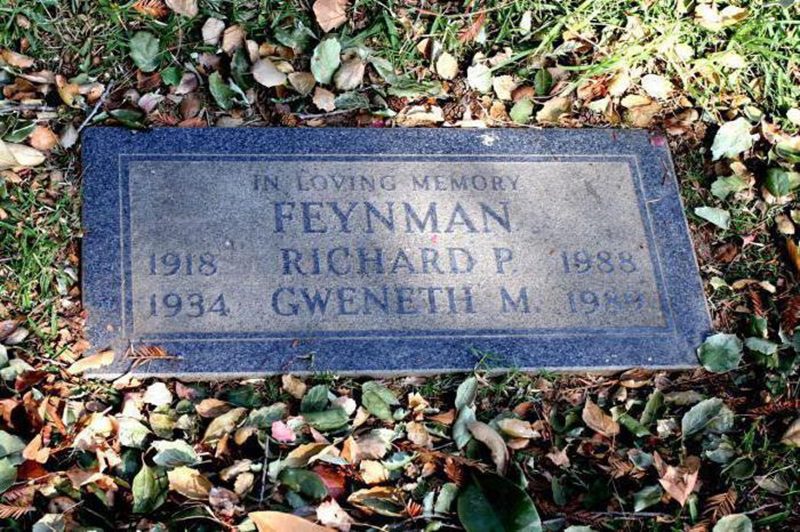
Despite his outstanding achievements in physics, Richard Feynman was equally known for his charisma and sense of humor.
At Los Alamos, the young physicist, cheerful and sociable, quickly earned a reputation as someone unafraid to argue even with Hans Bethe. Their frequent but good-natured debates earned Feynman the nickname “Mosquito” and Bethe “Battleship.”
However, as Feynman later recalled, working on the atomic bomb often felt dull. To entertain himself, he pulled pranks and played tricks that became legendary at Los Alamos.
He enjoyed playing the bongos (a Cuban percussion instrument), cracking safes and secret cabinets “just for fun,” creating clever codes, and even sneaking out of the laboratory to tease the guards.
Feeling homesick, the New York native even hung a bagel above his bed to recreate a sense of home.
Post-War Life, the Nobel Prize, and Legacy
After the war, Feynman left Los Alamos and, following his mentor Hans Bethe, who returned to his academic position, accepted a faculty position at Cornell University in Ithaca, New York. Unlike Bethe, Feynman played no significant role in the postwar development of either military or civilian atomic energy.
In 1950, he joined the California Institute of Technology, where he worked until the end of his career.
In 1965, Feynman was honored with the Nobel Prize in Physics “for fundamental work in quantum electrodynamics, with deep implications for the physics of elementary particles.”
In 1986, he served on the commission investigating the Challenger space shuttle disaster.
Richard Feynman passed away on February 15, 1988, in Pasadena, California.
Many consider Feynman one of the greatest theoretical physicists ever born in the United States.
His colleague in pioneering quantum electrodynamics, physicist Freeman Dyson, described Feynman as “half-genius, half-buffoon,” later clarifying: “a complete genius and a complete buffoon.”
This description aptly captures not only Feynman’s extraordinary intellect but also his infectious sense of humor, which made him one of the most beloved and respected scientists of his time.
Feynman’s legacy extends far beyond his scientific achievements. He was a brilliant educator whose lectures and books inspired generations of students and scientists.
Feynman was also a master science communicator, capable of explaining complex concepts in simple, accessible language. His enthusiasm, curiosity, and pursuit of truth will forever remain a source of inspiration for all who seek to understand the universe.