

In the 21st century, digital learning has become the new normal—at least in theory. In reality, everything depends on geography and wallet size. What a student receives in downtown Manhattan, where the educational process resembles a startup on steroids, differs from what happens in a small state. This article on manhattan1.one is an attempt to look inside New York schools, where EdTech accompanies students from the first bell. We will walk through the corridors of elite prep schools, peek into a fifth-grader’s iPad screen, listen to a teacher who is guided more by an algorithm than a handbook, and, of course, see if “digital” always means “effective,” or if it’s just another myth in the spirit of Manhattan.
Not Just Zoom: What Modern Digital Learning Is
When a teacher says “open your textbook,” it’s no longer about page 52 in a paper book, but about a tab in an app or an individual route on a platform. Digital learning has long jumped beyond the boundaries of remote schooling. It has settled in classrooms along with algorithms, analytics, and educational platforms that are constantly being updated.

The word “digital” indicates a way of thinking about learning. In a good implementation, it allows students to move at their own pace, receive tasks that truly match their level, and even choose how to absorb the material—video, interactive, case study, game, or text. And it gives the teacher real-time data: who is lagging behind, where the whole group got stuck, which block is being passed on “autopilot,” and where help is needed.
Globally, digital learning covers dozens of tools: from platforms like Google Classroom and Khan Academy to gamified apps, AI chatbots, personalized pathways, and even VR simulations of history lessons. But this is just the facade. The essence lies in changing the logic of the learning process itself.
And although this trend came from universities and tech companies, today it is actively being mastered by school venues—especially those that can afford the best. These are schools like Brearley (for girls) or private schools (mostly intended for the children of the elite). But how was digital learning turned into something like a new educational currency?
Manhattan Style Lesson: How It Works in Local Schools
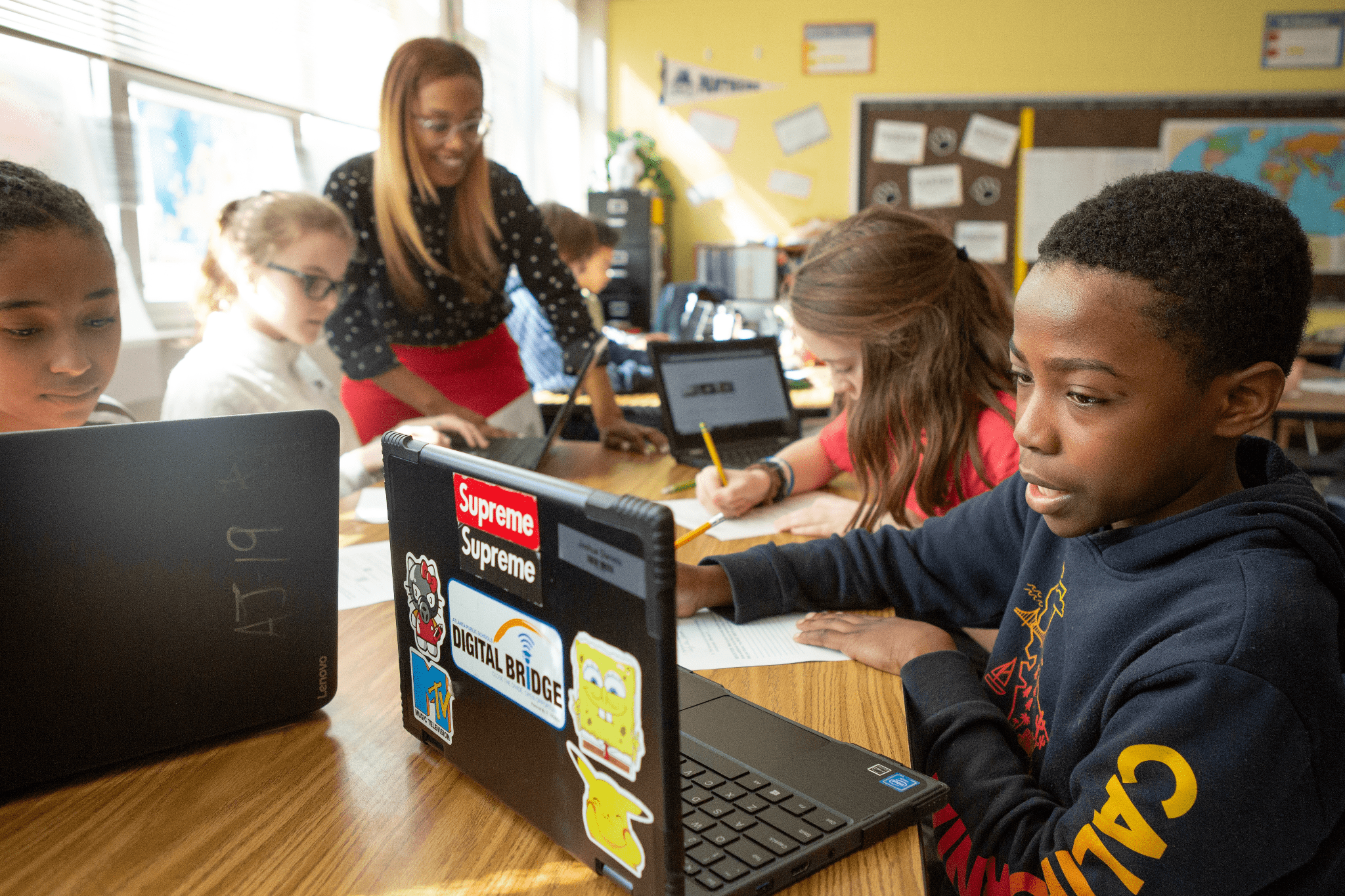
In Manhattan, digital learning is no longer an “optional extra.” Here, it is rather a basic infrastructure—on the level of electricity, Wi-Fi, and coffee in the teacher’s lounge. In private and charter schools, the tablet has long replaced the notebook, and learning platforms have become as daily a tool as the whiteboard and marker. True, this has hit hard on the skill of writing with a pen on paper.
A typical day for a student in a good Manhattan school begins with a login. The system knows what they covered yesterday, where they made mistakes, what is worth repeating, and what can be skipped. Math is on a personal route, reading comes with interactive notes, and science involves simulations where you can break a virtual experiment without any consequences for a real lab.
A separate story is the personalized learning programs that were born right here in New York. For example, “Teach to One”—a system that daily rebuilds the schedule and format of math classes for a specific student. Here, the algorithm decides who would benefit from a mini-lecture, who needs group work, and who needs quiet time with digital tasks. The teacher does not disappear, but their role changes: explaining the same thing to everyone less, working specifically with individuals more.
The city’s Department of Education is not lagging behind either. Virtual classrooms allow Manhattan students to take courses that are not available in their school—from advanced physics to programming. This looks like a compromise between elite education and the scale of a metropolis: access is wider, control is tighter, and digital is the glue holding the system together.
An important nuance: all this costs money. Licenses, devices, tech support, teacher training. That is why Manhattan is often presented as a showcase for digital learning. But the showcase here also displays a philosophy—education as a service, where the student’s time is considered a value, and data is used so as not to teach “everyone the same way.”
And here arises an interesting question that is rarely asked aloud: if the algorithm knows more about the student than the homeroom teacher, who is actually managing the learning?
When Data Replaces the Handbook: How Digital Learning Works in Manhattan in Practice
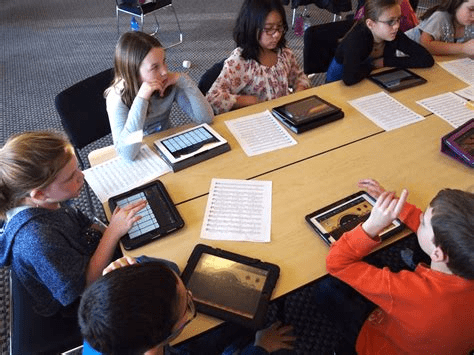
In Manhattan schools, digital learning has long moved from the level of experiments to daily routine. For example, within the framework of New York City’s virtual classroom program, students from Manhattan can study subjects in depth that are not in their school—particularly Advanced Placement level courses. Learning takes place online, but on a strict schedule and with a live instructor, not in a “video and test at the end” format.
One such instructor is Stephen Lazar, a teacher with many years of experience working with students through the Department of Education’s digital platform. In an interview with local media, he says directly: for high schoolers, this is preparation for the reality of college and work, where digital tools are a base, not a bonus. Manhattan students learn here alongside peers from Brooklyn or Queens, but the level of requirements remains Manhattan-style—high and with no indulgence for laziness.
Analytics is another characteristic feature of the local system. Platforms track progress in real time: what has been mastered, where gaps appear, who needs additional explanation. For the teacher, these are concrete numbers and signals, not intuitive guesses after a test. In Manhattan schools, such data is used to adjust learning during the semester, not to “summarize” post factum.
At the same time, digital learning here clearly shows limits. Even in a wealthy neighborhood, not all students start with the same conditions—different access to technology at home, different family support, different levels of digital literacy. Therefore, Manhattan schools also invest in support: tech support, teacher training, and work with parents.
If we cast aside loud words, the Manhattan approach comes down to a simple formula: digital tools work where they are used as a service for learning, not as a decoration. The myth of a “magic technology” that automatically makes education better is no longer sold here. The reality is different—systemic digital learning yields results only when concrete people, appropriate rules, and responsibility stand behind the screens.
Can You “Buy” a Good Education: The Manhattan Experience Without Illusions

In Manhattan, it is indeed easier to launch digital learning initiatives—money removes part of the organizational issues. Schools update equipment faster, have stable licenses for platforms, and invest in teacher training. As a result, digital tools work as a coordinated system. But these are just starting conditions, not a guarantee of quality.
What is clearly visible from inside Manhattan schools: technology does not save weak management. If there are no clear rules on why and how platforms are used, digital learning quickly slides into an imitation of activity. Tablets are there, dashboards are blinking, but the learning result does not change. Where the administration keeps focus on goals, digital becomes a tool, not an end in itself.
Another common opinion is that digital learning makes education softer and less demanding. The Manhattan experience suggests the opposite. Algorithms remove the “crowd effect,” where a student can hide behind others’ backs. The pace becomes faster, control more precise, and responsibility personal. For many, this is harder than a lesson where the curriculum adjusts to the average level.
In the end, Manhattan shows a simple thing that is often ignored: a good education cannot simply be bought. It is a tool that works only when responsibility is attached to it—both the student’s and the teacher’s. Digital solutions can make the path easier, but they cannot walk it instead of the person. Zero effort devalues everything according to the laws of mathematics: if you multiply by zero, you get zero.
Digital learning amplifies strong schools well, but just as ruthlessly exposes weak ones. It opens up wide opportunities but gives no guarantees. Just like a chance to get on the stage of Café Wha? does not mean becoming famous.