

The history of The New Yorker Hotel is as intriguing as its eccentric Art Deco design. Known as the “Big Old Lady,” this iconic Manhattan hotel has been a standout feature of the New York skyline since its opening in 1930. With its own power plant, an underground tunnel to Penn Station, and even an ice skating rink, the New Yorker was the most technologically advanced hotel of its time. During its heyday, it hosted influential politicians, celebrities, and athletes, while its Terrace Room entertained the era’s best big bands. In recent years, the hotel’s story has returned to its roots, proving it was destined for greatness from the start. More on manhattan1.one.
Beginnings of Construction
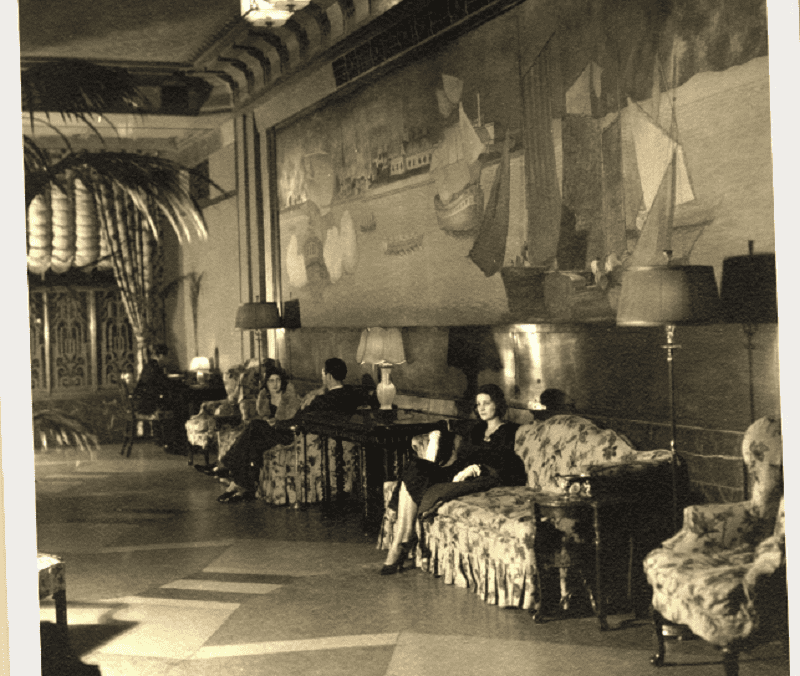
Construction of The New Yorker began in 1928, designed by Sugarman and Berger Architects. The hotel, covering 1.2 million square feet, was set to become the most modern building in the country and one of the largest of its time.
The hotel officially opened on January 2, 1930, after just 22 months of construction. With 2,503 rooms, priced from $3.50 per night, the 43-story hotel rose 78 feet below ground and into the Manhattan skyline. It was a feat of engineering, built in less than two years.
In 1932, the hotel introduced direct access to public transportation, with the opening of the Eighth Avenue subway line. This gave guests convenient entry to Penn Station via a private hotel tunnel.
Nikola Tesla and Other Notable Guests
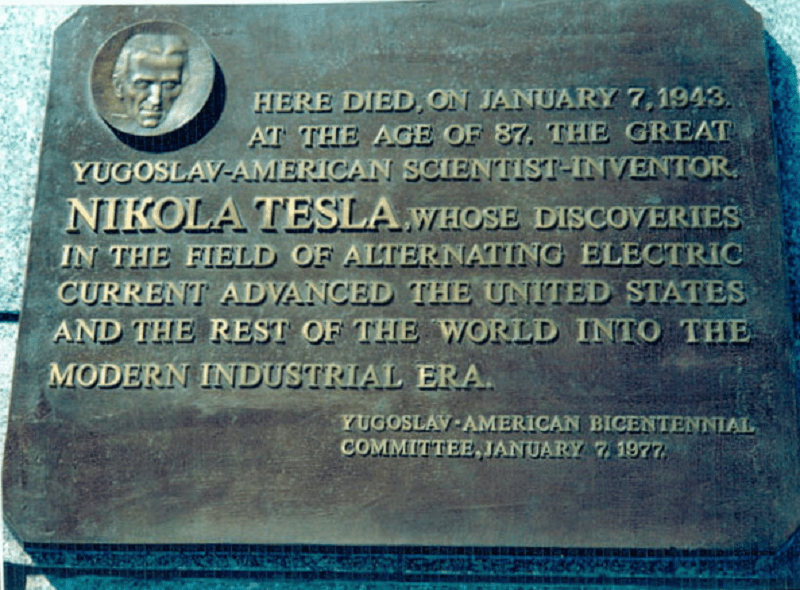
In 1933, Nikola Tesla, the renowned physicist and inventor, moved into The New Yorker. Occupying rooms 3327 and 3328, Tesla lived in the hotel until his death on January 7, 1943. The inventor of alternating current systems and the Tesla coil left his mark on the hotel’s history.
In 1939, NBC began broadcasting live from the Terrace Room, featuring performances by famous musicians like Benny Goodman, Woody Herman, and the Dorsey brothers. The room also hosted nightly ice-skating shows on a retractable rink, enhancing the hotel’s reputation as an entertainment hub.
In 1941, the Brooklyn Dodgers, led by Leo Durocher, made the New Yorker their base during the World Series. This was the first “Subway Series,” where the Dodgers faced the Yankees but lost in five games.
A Modern Marvel
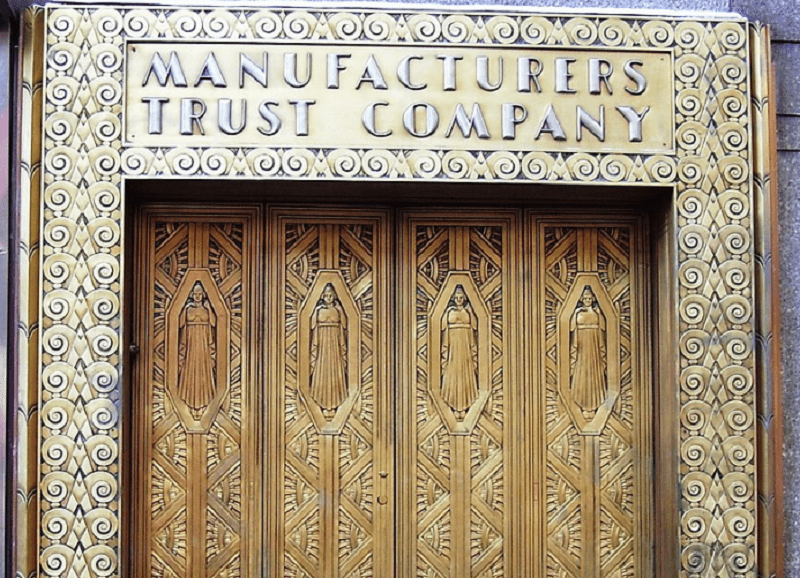
During World War II, The New Yorker became a transit hub for soldiers heading to Europe due to its proximity to Penn Station. Many servicemen stayed at the hotel, experiencing its grandeur for the first time.
In 1948, the hotel became one of the first in the U.S. to install televisions, starting with 100 rooms. It marketed itself as the hotel with “the most televisions under one roof.”
In 1959, Barack Obama Sr., father of the 44th U.S. President, stayed at the hotel as part of a student airlift initiative organized by Senator John F. Kennedy. This program provided scholarships and living expenses for Kenyan students in the U.S.
In 1971, boxer Muhammad Ali stayed at The New Yorker after his defeat in the “Fight of the Century” against Joe Frazier at Madison Square Garden.
Closure and Revival
By 1972, the hotel closed due to financial difficulties during the decline of midtown Manhattan. From 1976 to 1980, the Unification Church purchased the building, converting it into a missionary center. In 1994, it reopened as a hotel under the management of the New Yorker Hotel Management Company, with 150 rooms starting at $45 per night.
Following the 9/11 attacks in 2001, the hotel donated 10,000 free nights to volunteers, earning recognition from the NYPD and Chicago Fire Department.
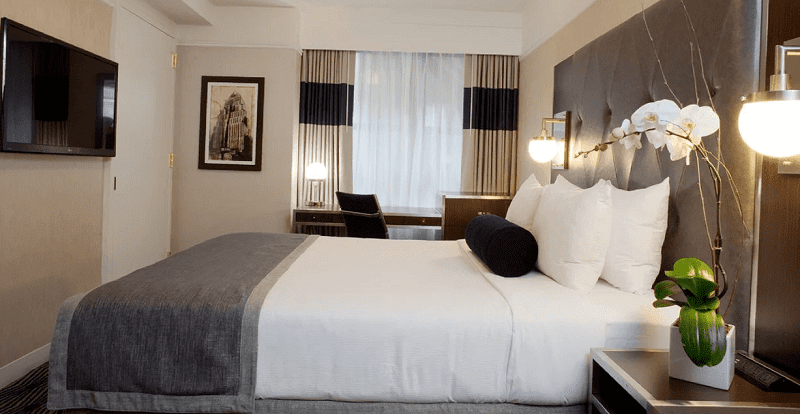
In 2006, the hotel underwent a $70 million renovation, restoring its Art Deco heritage and upgrading its heating, cooling, and safety systems. By February 2009, it had 912 guest rooms spanning floors 19 to 40, with modern amenities like LCD TVs and improved Wi-Fi.
Recent Developments
In 2008, the hotel’s private power plant, which once supplied electricity for a city of 25,000 people, was declared an engineering milestone by the Institute of Electrical and Electronics Engineers.
In 2014, The New Yorker joined the Wyndham Hotels network. Between 2014 and 2016, it added 139 executive rooms and suites, combining modern décor with Art Deco charm.
In 2016, Hillary Clinton delivered her concession speech at the Grand Ballroom of The New Yorker, standing alongside former President Bill Clinton.
Today, the Manhattan Landmark Hotel remains a symbol of innovation and history, continuing to captivate guests with its iconic legacy.