

The Strand Bookstore, operating in Manhattan since 1927, is worthy of respect in its own right. Especially considering that all this time it has been surrounded by tourists, insane rent rates, and online giants that seem to have sworn to destroy everything alive in retail. It is known for its slogan “18 miles of books” and its amazing ability to remain itself where most similar places have long since dropped out of the race. The manhattan1.one website decided to figure out how this book business manages to survive in New York’s most prestigious borough.
The Strand is hard to explain in a single sentence. It is a bookstore that has been rewriting its own formula for decades—adding, removing, adapting—while never losing its recognizable identity. There are always reasons to close: the real estate market in the center of one of the most expensive cities in the world gives no discounts to anyone, reading habits change, and accountants have probably looked at the numbers with deep sadness more than once. And yet, the store holds on. How does it manage to do so?
Key Figures and Facts
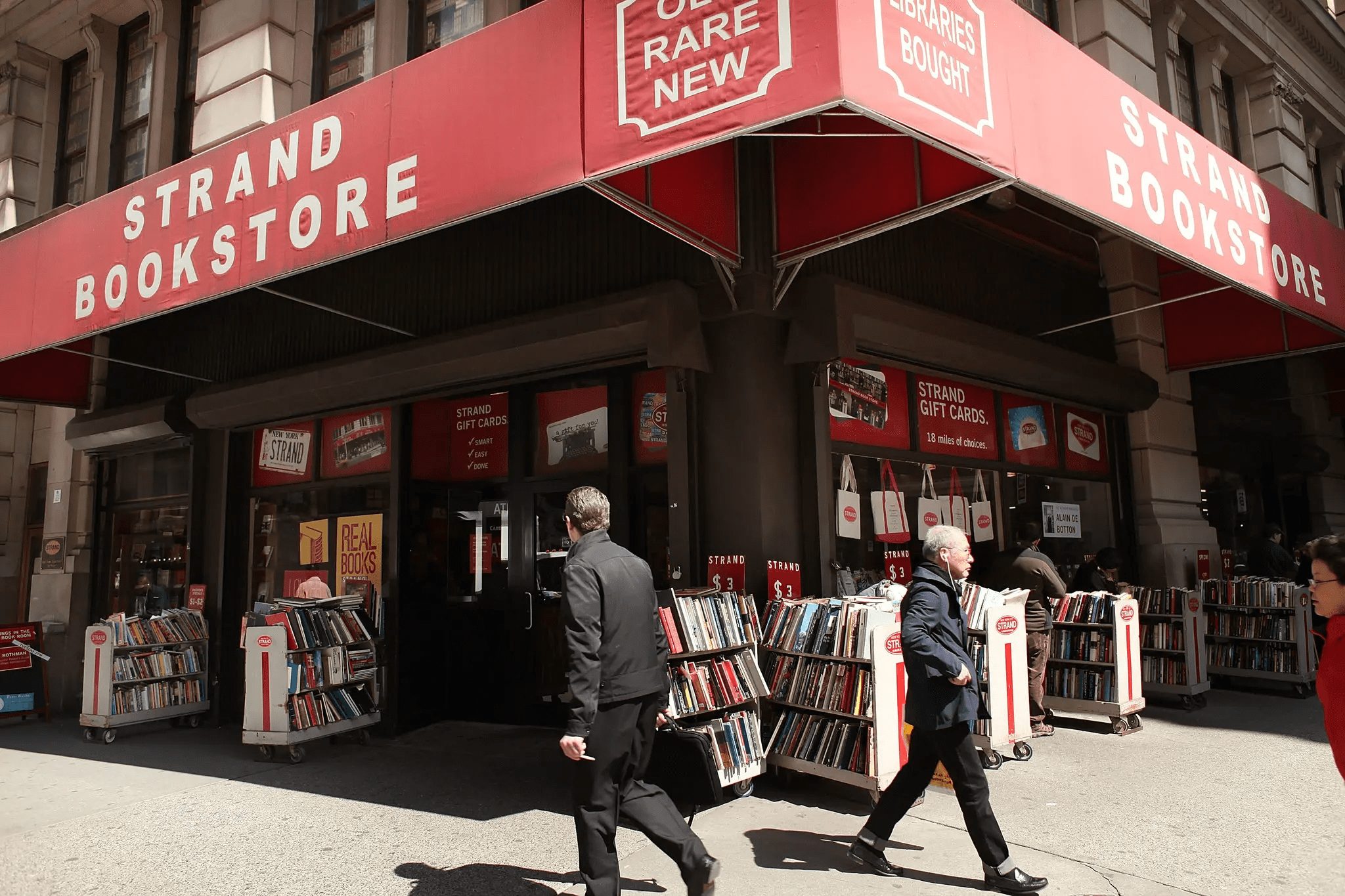
The Strand opened in 1927 on what was known as “Book Row,” where dozens of bookstores operated at the time. Time passed, competitors disappeared, but Benjamin Bass only expanded his store’s assortment and retail space. The business survived economic downturns, generational changes, and several waves of book market transformation. But it did not vanish, unlike the Victorian Gardens amusement park. The business is now run by the third generation of the Bass family.
Today, the store spans several floors and houses over 2.5 million books. These include new editions, used books, and rare copies that can cost anywhere from a few dollars to massive sums. The signature slogan about “18 miles of books” is no exaggeration; it truly indicates the scale.
The Strand employs several hundred people—a large team for independent retail. The store serves both regular customers and a steady stream of tourists who come more to “look around” than to buy a specific book. The fact that the audience is so diverse affects both the pricing and the way merchandise is displayed.
A separate part of the business is the rare book department. This is a different level altogether: collectors, condition appraisal, authenticity, the history of each copy. Such sales are not mass-market, but they shape the image and add depth to the brand.
The Manhattan Bookstore Business Model

The Strand makes its money on a combination of three categories: new books, used, and rare editions. It seems simple, as does everything ingenious. Well, it’s actually quite logical: this way you can reach more categories of buyers. New books provide volume and a clear sales structure. Used books cater to the budget segment. Rare copies yield individual deals where one sold item means a solid profit right away.
By the way, the used segment is one of the key elements of their success. Books bought back from customers make up the lion’s share of the inventory. They are sold with a markup, but the total price is generally much more attractive than the cost of new editions. For the buyer, it’s a saving; for the store, it’s a way to maintain competitive pricing.
A distinct layer is merch and related goods. Tote bags, notebooks, and T-shirts with branded slogans sell just as well as books. They are cheaper to produce, carry a higher profit margin, and work great for brand recognition. A person might buy no literature at all but leave with a Strand logo bag—and that is also profit.
Another source of income is events. Book launches, author meet-and-greets, and signings—all of this brings people into the store. Even though the events themselves don’t always generate huge immediate revenue, they sustain interest and encourage the audience to return.
Ultimately, this creates a model that doesn’t rely on a single pillar. The Strand successfully combines different retail formats: a bit of classic retail, a bit of the collector’s segment, and a bit of branding. Such a structure is harder to manage, but it offers a better chance of holding out where simple formats don’t last long.
Trends and Controversies Around The Strand

The US book market shifted long ago under the pressure of online sales. Huge platforms offer speed, lower prices, and the habit of one-click buying. For independent bookstores, this means a constant fight for the attention of a person who already has a marketplace tab open. In this situation, The Strand doesn’t try to copy the online format—it places its bet on those who aren’t shy about leaving the house and who love physical paper books.
Therefore, we can point to a specific trend: the bookstore is gradually transforming into a venue where book lovers enjoy spending time. People linger longer in the aisles, browse more than they planned, and often come without a clear goal. The checkout total is important, but a returning visitor is no less important. An article in The New Yorker about the history of bookselling formulated this exact thought:
“Bookstores must reimagine themselves as social and cultural venues.”
Another point of tension is pricing. Customers easily check prices online and often quickly see where it’s cheaper. The Strand has its counterargument: used books and discounts. This is no panacea, but it’s quite effective for the part of the audience willing to hunt for a bargain right in the store rather than on a screen.
The pandemic period revealed the weak spot of physical retail: reliance on foot traffic. For The Strand, this was a moment when they had to cut costs and lay off staff. Owner Nancy Bass Wyden spoke about this without embellishment:
“We survived the Great Depression… even the advent of e-books.”
The result is a rather tense balancing act. On one hand, a strong name and steady interest. On the other, constant pressure from online retail and changing buyer habits. The bookstore is forced to constantly adapt so as not to lose its standing.
The Conflict Between Culture and Economics

The Strand has long been perceived as part of New York’s cultural identity. For the city, it is an iconic and recognizable place. But for the owner, it is first and foremost a business with expenses, payroll, and rent, which is rarely cheap in Manhattan.
A telling story is the debate over historic landmark status. Such status offers protection and prestige, but simultaneously imposes restrictions: it’s harder to change the interior, more expensive to maintain the building, and there’s less freedom in management. In The New Yorker, they put it quite bluntly:
“Landmark status can protect a building, but it also complicates running a business.”
Another interesting point is the location. Manhattan generates a massive flow of people, but with it comes constant financial pressure. The cost per square foot here forces you to literally calculate the value of every single inventory item. Books with a small margin don’t look very profitable in this reality, which is exactly why The Strand expands its assortment and seeks additional revenue streams.
This results in a rather grounded dilemma. On one side is the expectation that such places “must exist” because they shape the city’s atmosphere, much like the dance parade and festival held every spring. On the other side is the economics, which leaves almost no room for romance. The Strand bookstore tries to strike a balance and is forced to constantly prove that culture can also generate real money.
Conclusions: How Independent Retail Survives
The story of The Strand clearly shows: there is no universal recipe for business survival, but there is a set of working principles.
First is income diversification. Books remain the foundation, but used editions, rare copies, merch, and events operate alongside them. This prevents reliance on a single source of revenue.
The second point is treating the visitor as a regular guest rather than a one-time buyer. A person might not buy anything today but could return tomorrow or in a month. This logic is more complex and less predictable, but it builds loyalty. In the case of The Strand, this is especially important because a significant portion of the audience is tourists who need to be engaged from the very first visit.
Third is the power of the brand. Over the decades, The Strand has gained recognition that is difficult to replicate. This allows them to sell the very experience of being in this place. In effect, the brand becomes a separate commodity monetized through those same tote bags, clothing, or even photos on social media.
The market changes quickly, and a flexible model is vastly more effective than a rigid one. The Strand stays afloat because it has learned these business fundamentals and applies them in practice.