

Herbert Frank York, an American physicist whose groundbreaking contributions to nuclear physics left an indelible mark on history, is one of the many names whose work reshaped the world. Born on November 24, 1921, in Rochester, New York, York exhibited an early fascination with science, particularly physics. In 1939, he enrolled at the University of Rochester, immersing himself in the study of the universe’s mysteries. More on manhattan1.one.
Early Career and the Manhattan Project
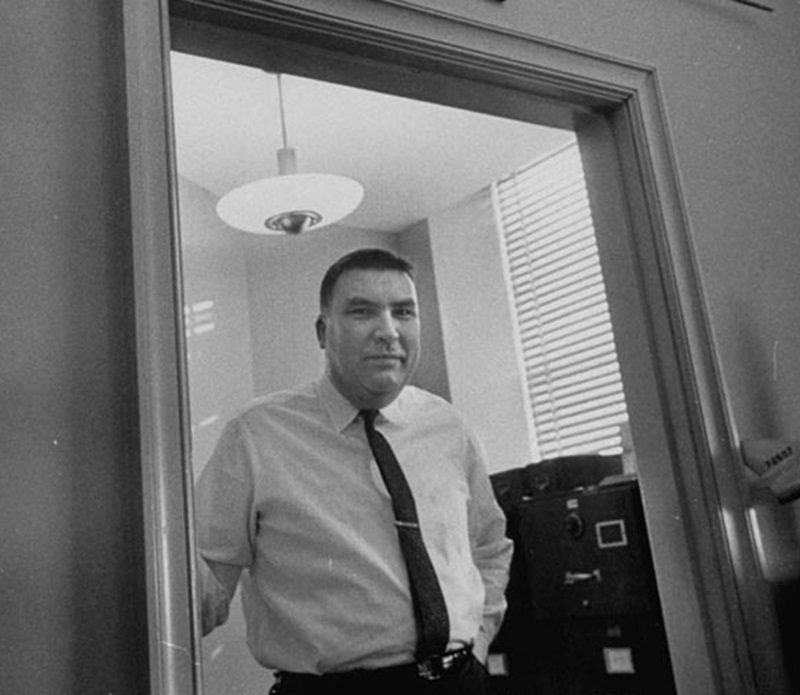
In 1942, as World War II intensified, York joined the Radiation Laboratory at the University of California, Berkeley, under Ernest Lawrence. By 1943, after earning his master’s degree, he was recruited into the Manhattan Project to work in isotope separation under Frank Oppenheimer, the younger brother of Robert Oppenheimer, director of the Los Alamos Laboratory.
York’s primary focus was on the calutron, a device designed for the electromagnetic separation of uranium isotopes. His work contributed to the development of calutrons at the Y-12 site in Oak Ridge, Tennessee, which became vital in producing uranium-235 for the atomic bomb.
A Key Player in Isotope Separation
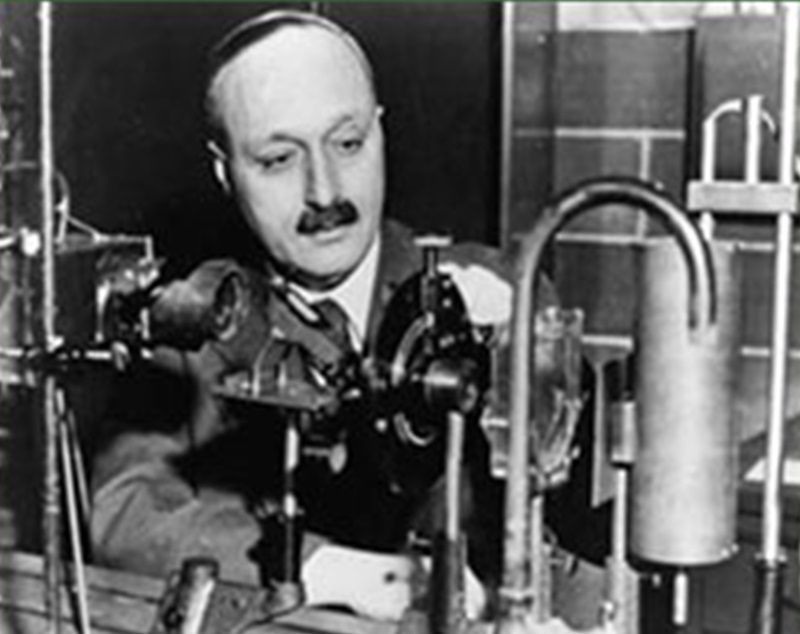
York played a pivotal role in designing and optimizing the Alpha and Beta racetracks at Oak Ridge. These devices enabled the large-scale production of enriched uranium, critical for the Manhattan Project’s success. His technical expertise and problem-solving abilities earned him recognition among his peers, shaping the foundation for his future contributions to science and policy.
Post-War Contributions and Advocacy
After the war, York transitioned to academia, joining the University of California, Berkeley, as a professor of physics. In 1952, he became the first director of the Lawrence Livermore National Laboratory, where he oversaw advancements in nuclear weapons, including work on the hydrogen bomb.
However, York’s awareness of the ethical implications of nuclear technology grew over time. By the late 1950s, he pivoted his career toward arms control and disarmament. As a scientific advisor to U.S. presidents, York played a critical role in nuclear test ban negotiations with the Soviet Union and advocated for policies aimed at reducing the proliferation of nuclear weapons.
Establishing Peace Initiatives
In 1983, York founded the Institute on Global Conflict and Cooperation, dedicating himself to resolving international conflicts through diplomacy. His work emphasized the importance of collaboration and peaceful solutions to global challenges. His efforts earned him numerous accolades, including the Leo Szilard Award in 1994 and the Enrico Fermi Award in 2000 for his contributions to nuclear deterrence and arms control.
Legacy
Herbert York passed away on May 19, 2009, at the age of 87, leaving behind a legacy as both a pioneer in nuclear physics and a tireless advocate for peace.
- He authored numerous scientific papers and books on nuclear physics and arms control.
- York’s commitment to ethical scientific practices and his dedication to preventing nuclear proliferation remain a cornerstone of his legacy.
- He is remembered as a brilliant physicist, a visionary leader, and a passionate peace advocate who tirelessly worked to balance the power of scientific discovery with its moral responsibilities.
York’s life journey, from his early days in Rochester to his work on the Manhattan Project and beyond, serves as a testament to the potential of science to transform the world, for both good and ill, and the enduring importance of ethical considerations in scientific endeavors.