

Washington Market is a former food market in Manhattan that evolved into New York’s primary food supply center in the 19th century. Located near the Hudson River, it grew from a local street bazaar into a giant trading ground through which tons of produce passed daily.
Washington Market operated around the clock, buzzing with noise and smelling of fish, fruit, and money—while simultaneously driving city officials crazy. How did the market that fed a metropolis become a symbol of disorder? Why was it eventually demolished to make way for skyscrapers? And how did a place that once defined the city’s rhythm nearly fade from the memory of even New Yorkers themselves? At manhattan1.one, we have the answers.
How Washington Market Emerged
In the early 19th century, New York was growing rapidly, and along with its population, the need for a stable food supply increased. The Hudson River waterfront seemed like the perfect location—ships docked right at the piers, and unloading took hours rather than days. This is where Washington Market formed, quickly expanding beyond a typical farmers’ market.
For its first few decades, the market looked quite modest—rows of vegetables, meat, and fish, with merchants who knew their customers by face. But the city was changing as swiftly as the ship masts multiplying in its harbor. With the development of port trade, produce began arriving from other states and even other continents.
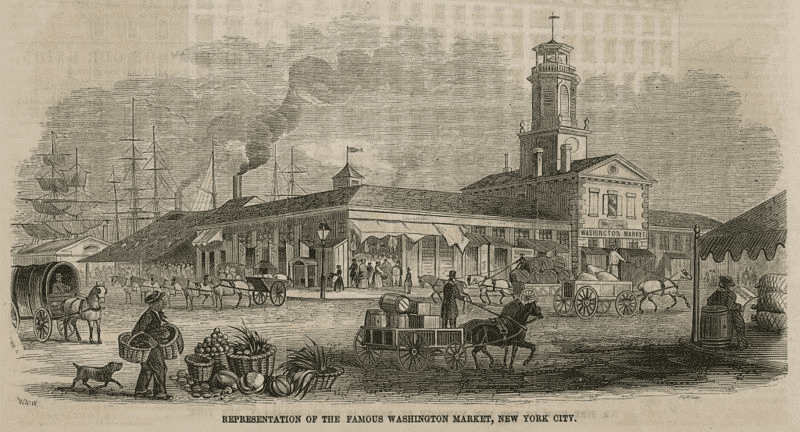
Interestingly, the neighborhood around the market essentially began living by its schedule. Streets filled with wagons before dawn, and at night, work hardly ever stopped. The market expanded across several blocks and, as Project for Public Spaces notes, literally became a “city within a city”—bustling, dirty, and active, as we would say today, 24/7.
To be specific, wholesale trade boiled from midnight until about 2:00 to 6:00 a.m., when the streets were packed with trucks, farmers, and distributors. Then it shifted into a retail format. By the mid-1940s, constant chaos reigned here.
Over time, Washington Market swallowed up several blocks and turned into a complex trading system. Warehouses, cold storage facilities, middlemen, and wholesalers appeared. In fact, it was an early version of a food hub serving the entire city.
How the Market Became New York’s Food Center
Washington Market started as a small local market in 1812–1813 near the Hudson River, but by the 1820s and 1830s, it had expanded to cover an entire block—between Fulton and Vesey Streets, and between Washington and West Streets. It became New York’s largest wholesale market, and by some estimates, one of the largest in the entire country.
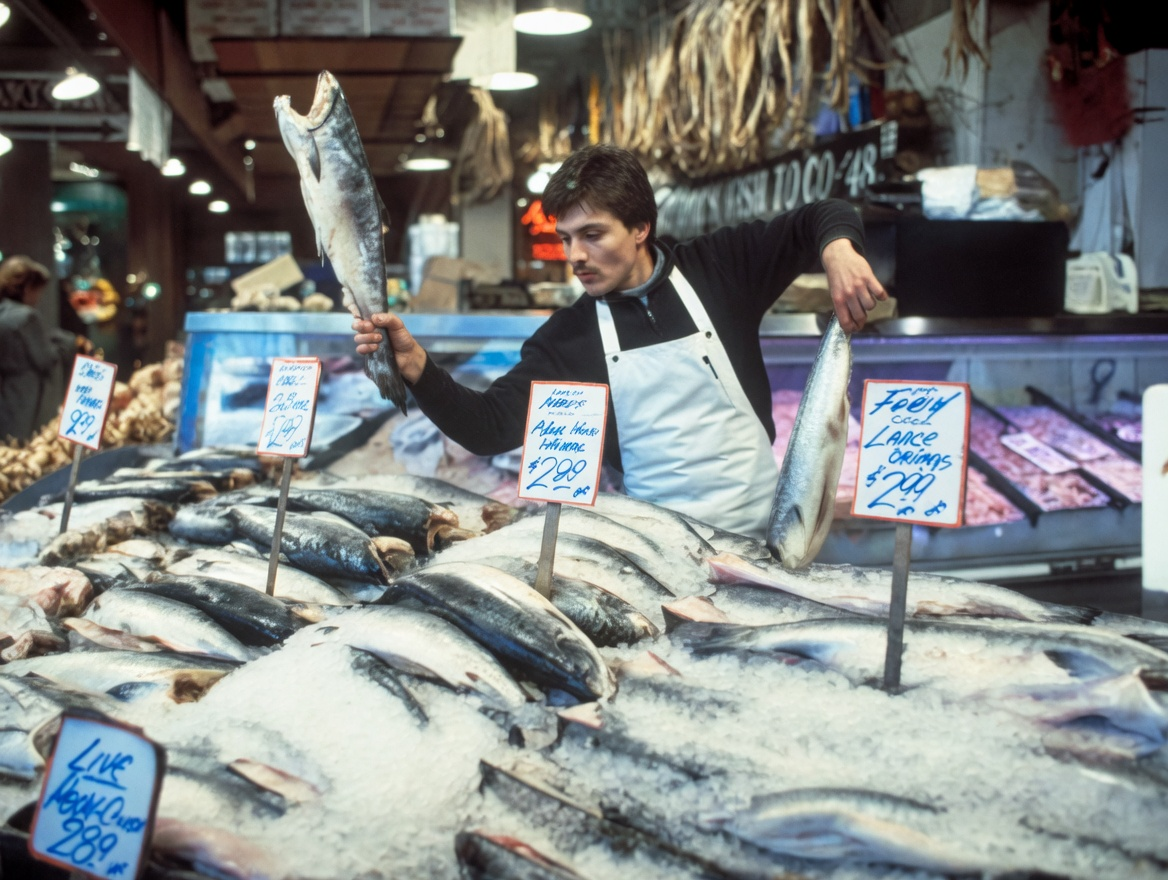
By the mid-19th century, its scale was national. In 1853, the New York Times called it “the largest and by far the most important market in the city.” At its peak, over 500 vendors worked here, selling not only local fruits and vegetables but also imported products: Siberian caviar, Italian Gorgonzola cheese, Norwegian sardines, Flemish hams, and game from England. Beyond the main pavilions, the market occupied entire floors of surrounding row houses and townhouses.
The infrastructure also evolved to match this scale. Initially, there were open stalls and horse-drawn wagons, and later, a whole network of warehouses and logistics navigating the narrow streets.
Ultimately, Washington Market became the heart of New York’s food system. It supplied groceries to shops, restaurants, hotels, and ordinary residents. According to 1945 estimates, roughly one-eighth of the nation’s entire food supply passed through New York, and the lion’s share of that flow went right through Washington Market.
Major Problems, Criticism, and Decline
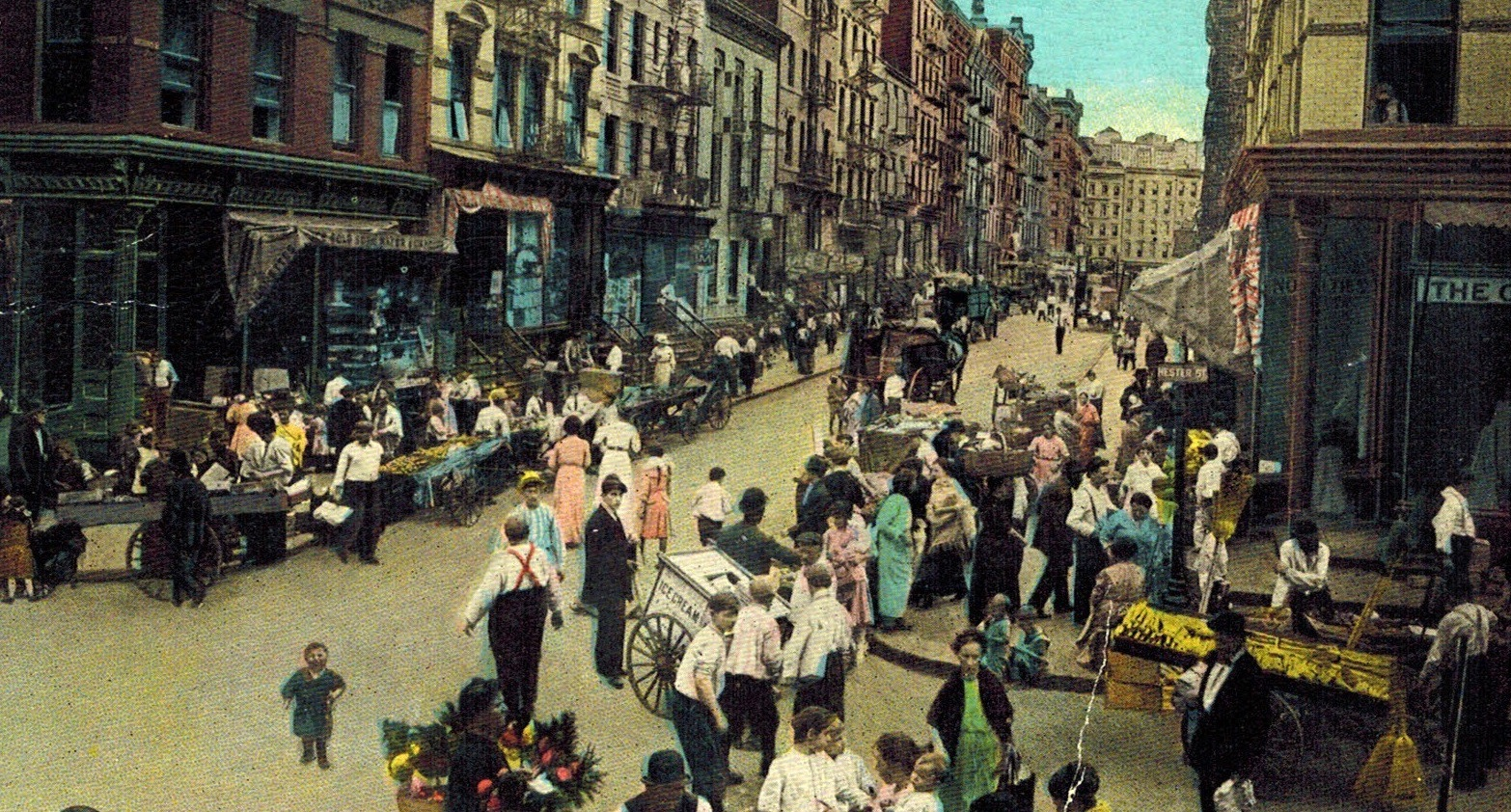
The larger Washington Market grew, the more obvious its weaknesses became. As early as the beginning of the 20th century, the market was regularly criticized for unsanitary conditions. In 1906, the New York Times called the adjacent streets a “dangerous place” due to piles of garbage and waste that could trigger an epidemic. In 1913, one reader described her morning visit: she saw massive piles of trash right on the streets at 5:30 a.m.
Over the years, the chaos only intensified. The neighborhood’s narrow streets could not handle the flow of horse-drawn wagons, and later—cars, trucks, and passenger vehicles. In the 1950s, suppliers and buyers complained that it was difficult even to drive or walk through with goods. The market, once praised as “the largest and by far the most important market in the city,” was now frequently called “Manhattan’s biggest eyesore.”
City authorities repeatedly tried to restore order. In 1914, a new pavilion was built specifically to improve sanitary conditions: it featured its own internal streets, refrigerators, a water supply, and drainage. In the late 1930s, the WPA carried out another modernization, and in 1941, the market was updated to a modern look with enameled panels. But these changes did not solve the main problem—the market had physically outgrown its location and surrounding infrastructure.
Modernizing the market in place proved virtually impossible. The old cast-iron warehouses and townhouses around it were retrofitted for trade but did not meet new logistics and hygiene standards. Most importantly, the city already had more ambitious plans for this area.
As a result, the great food giant that had fed New York for over a century found itself trapped by its own success: too large for its old infrastructure, too dirty and chaotic for a modern city, and too “cheap” for such expensive land.
What Happened to Washington Market
By the mid-1950s, Washington Market definitively stopped fitting into the new city. It operated at a loss every year, the surrounding streets were perpetually jammed, and the land in the center of Lower Manhattan was worth far more than an old food market. In January 1957, the market was officially closed.
The city government launched the massive Washington Street Urban Renewal Plan. It covered 24 blocks and called for the demolition of most old buildings to make way for new development: housing, a college, a park, and commercial spaces. Vendors were gradually relocated to a new, modern complex in Hunts Point in the Bronx. The main relocation occurred in the early 1960s (some sources say 1962, others 1967, when the market completely moved).
The market itself was demolished. The main 1914 pavilion was torn down, as were many of the surrounding row houses and townhouses where vendors once lived and worked. A massive clearing of the territory began in their place.
A portion of this land later became part of the World Trade Center development zone. That means the very same giant complex we all know grew right on the site of New York’s former main food market. Along with the market, neighboring areas were also demolished—Radio Row and the small ethnic neighborhood of Little Syria.
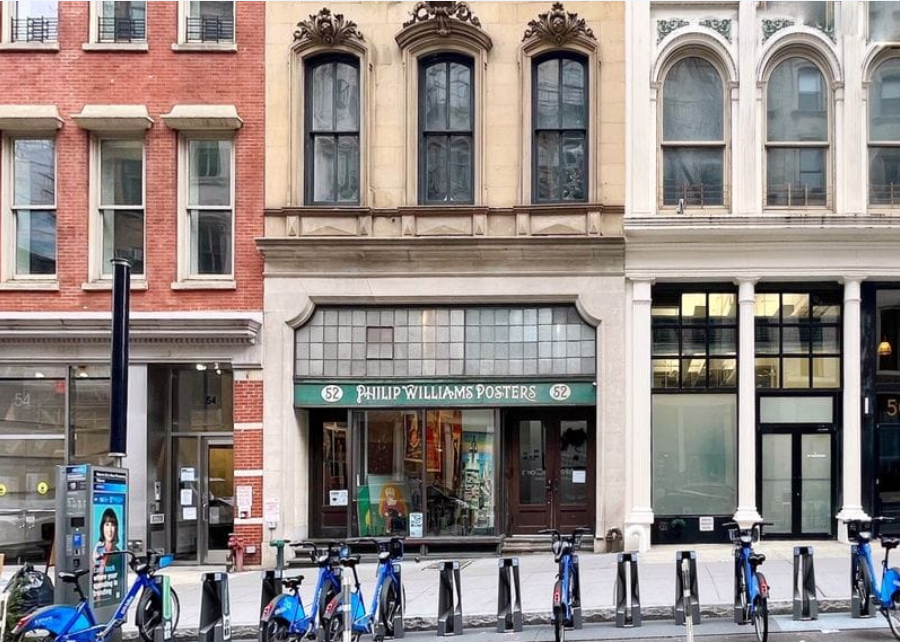
Not everything disappeared completely. A few historic townhouses on Washington Street were saved and even physically moved to Harrison Street. But overall, almost nothing remained of the huge market that once occupied entire blocks.
In the mid-2020s, a portion of the market’s former territory is home to Washington Market Park—a small green oasis that local residents won back in the 1970s through lawsuits and community efforts. But the market itself, which fed New York for over 150 years, simply disappeared under the bulldozers of “renewal.” However, it is heartening to see that local residents care about the ecology and environment, which is also clearly evident in Hudson River Park.