

The Chrysler Building is one of Manhattan’s most famous skyscrapers, built with the fortune of automotive tycoon Walter Chrysler. This article on manhattan1.one is dedicated to the building and the man who decided to leave behind not just another business asset, but a stone signature in the New York sky.
This story has it all: the high stakes of big business, a competition bordering on a gamble, and decisions that resemble moves in a chess game more than real estate development. Why would an entrepreneur who made his money in cars suddenly invest in a skyscraper? And how did the race for height turn into a matter of honor—complete with hidden tricks, conflicts, and reputational costs?
Manhattan — A District Where Business Becomes Spectacle
In the late 1920s, Manhattan resembled a stage where big money competed for public attention. Developers, industrialists, and financiers were literally looking up. Every new project tried to surpass the last, and it was no longer just about rental income, but about one’s name on the city’s skyline.
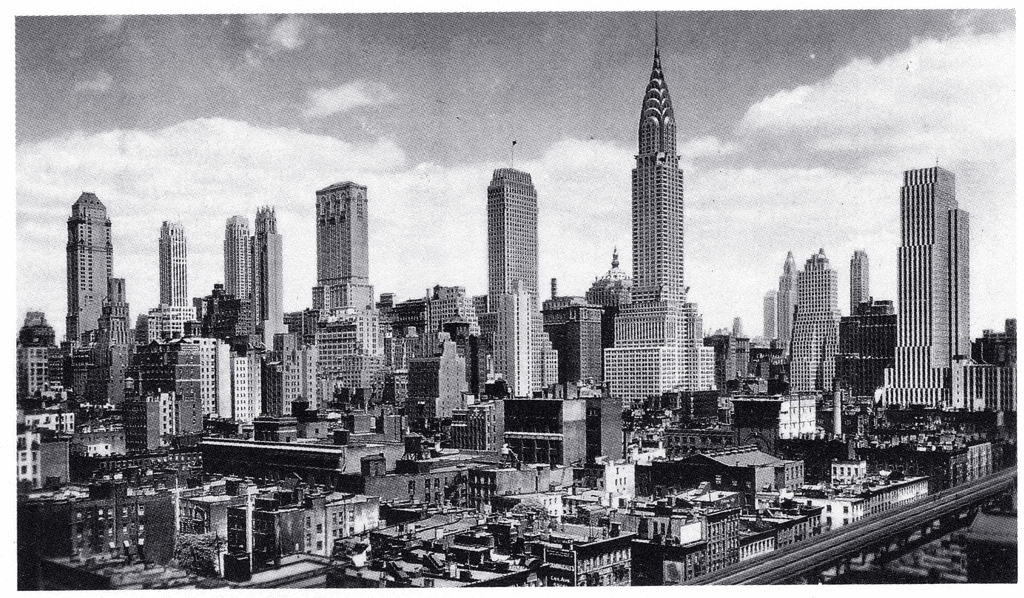
The media of the time captured this atmosphere perfectly. Materials in The New York Times suggested that height had become a metric for ambition. It’s hard to disagree! The towers rose quickly, but the egos of their owners grew even faster. Every foot upward was a signal to the market: “I’m the one in charge here.”
At the same time, the economy encouraged risk-taking. The US was experiencing a period of explosive growth, money was relatively cheap, and faith in permanent progress was nearly an axiom. Development turned into a high-stakes game: the winner got a massive profit, and as a bonus, immense status.
In such an environment, projects emerged that were difficult to justify by pure economics alone. High-rises became showcases for ambition, and their owners became the directors of their own myths. Against this backdrop appeared Walter Chrysler—an entrepreneur who keenly felt the rhythm of the industrial age and knew how to embody it in grand projects.
Walter Chrysler — An Entrepreneur Who Built on His Own Terms
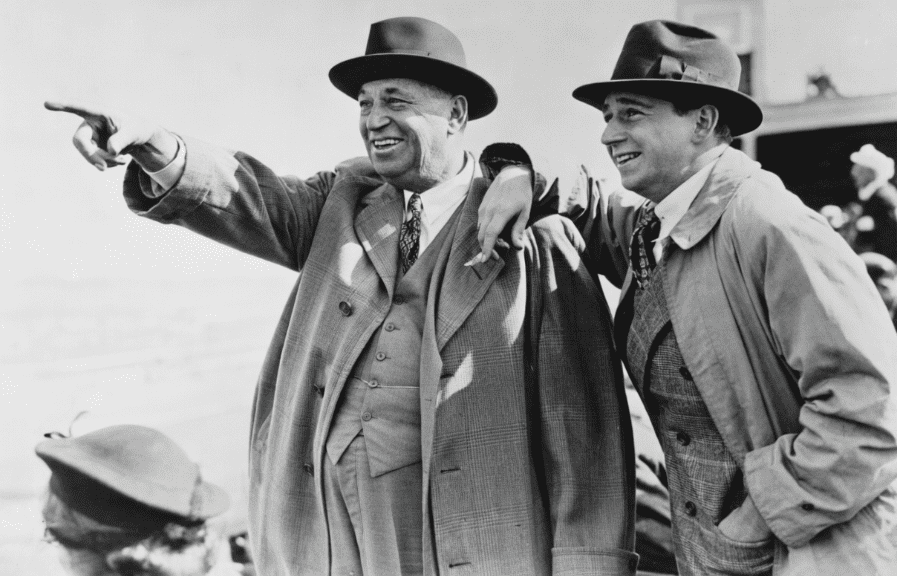
Walter Chrysler’s story begins far from skyscrapers—in railroad machine shops where he worked as a mechanic. He tore down locomotives, learned by doing, and gradually rose to become an executive. This background instilled in him a simple habit: trusting his own experience over theory.
In business, this was immediately apparent. Chrysler disliked relying on banks and outside investors, preferring to keep control in his own hands. At a time when financial empires were built by moguls like John Pierpont Morgan, who thought in terms of markets and capital, Chrysler acted differently—through engineering logic and personal involvement.
Walter’s path in the automotive industry also looks like a series of risky moves. He joined troubled companies, cleaned house, and moved on. In 1925, he launched his own brand, choosing his own last name for it without any extra frills. The Chrysler brand quickly joined the market leaders. But our hero wasn’t just a financier picking a profitable investment. He thought like a manufacturer for whom a car was, above all, a machine.
That is why the idea of building a skyscraper seems logical upon closer inspection. For Chrysler, it was another complex “assembly”—only this time, it was a symbol rather than a car. He financed the project with his own funds and did not cede control to outside entities. This approach reduced flexibility but provided complete freedom in decision-making.
As a result, the Chrysler Building became a reflection of its owner’s character. Sharp, technical, slightly defiant. And at the same time—deeply personal.
How the Chrysler Building Came to Be — A Story of Ambition and Cunning
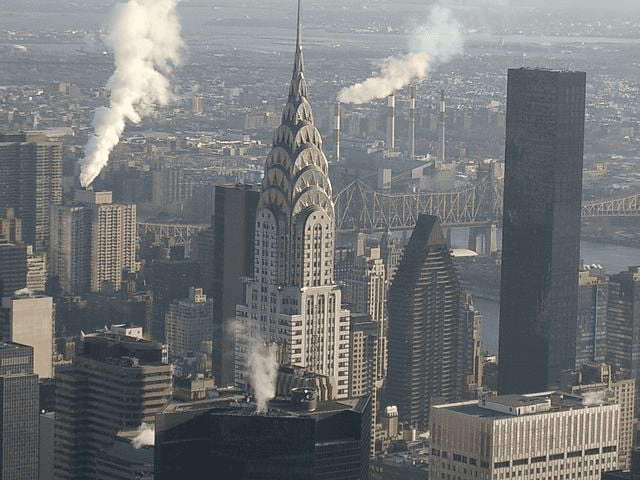
The idea for the building didn’t originate with Chrysler. Initially, the project belonged to developer William Reynolds, who planned to erect yet another office tower in Manhattan. But he couldn’t maintain control for long: Chrysler bought the project and quickly changed its scale. From that moment on, it was a personal project with character.
William van Alen became the architect—an ambitious figure and not a particularly easy one for clients to handle. He was given freedom but kept under pressure: deadlines were tight, competition was aggressive, and the stakes were high. Construction moved fast, floors were added one by one, and the whole story felt more like a production line than traditional real estate development.
A parallel storyline unfolded in the city: the race for height. Chrysler wasn’t the only one who wanted to be at the top. Other projects were also reaching upward, and the difference between them was measured not in tens of feet, but in single digits. This created a strange situation: decisions were made not based on construction logic, but as moves in a chess game to outsmart the competition.
The Secret Spire and Victory in the “Race for Height”
The most famous episode in this story is the spire. It was assembled inside the building to avoid attracting the attention of competitors. Once the structure was ready, it was hoisted up in a very short time—instantly changing the leader of the race for height.
The move was almost theatrical, but it worked. The Chrysler Building lunged ahead to become the tallest building. Competitors simply didn’t have time to react. In the end, what proved decisive was not the budget or the speed of construction, but the ability to think outside the box.
Architecture as Advertising
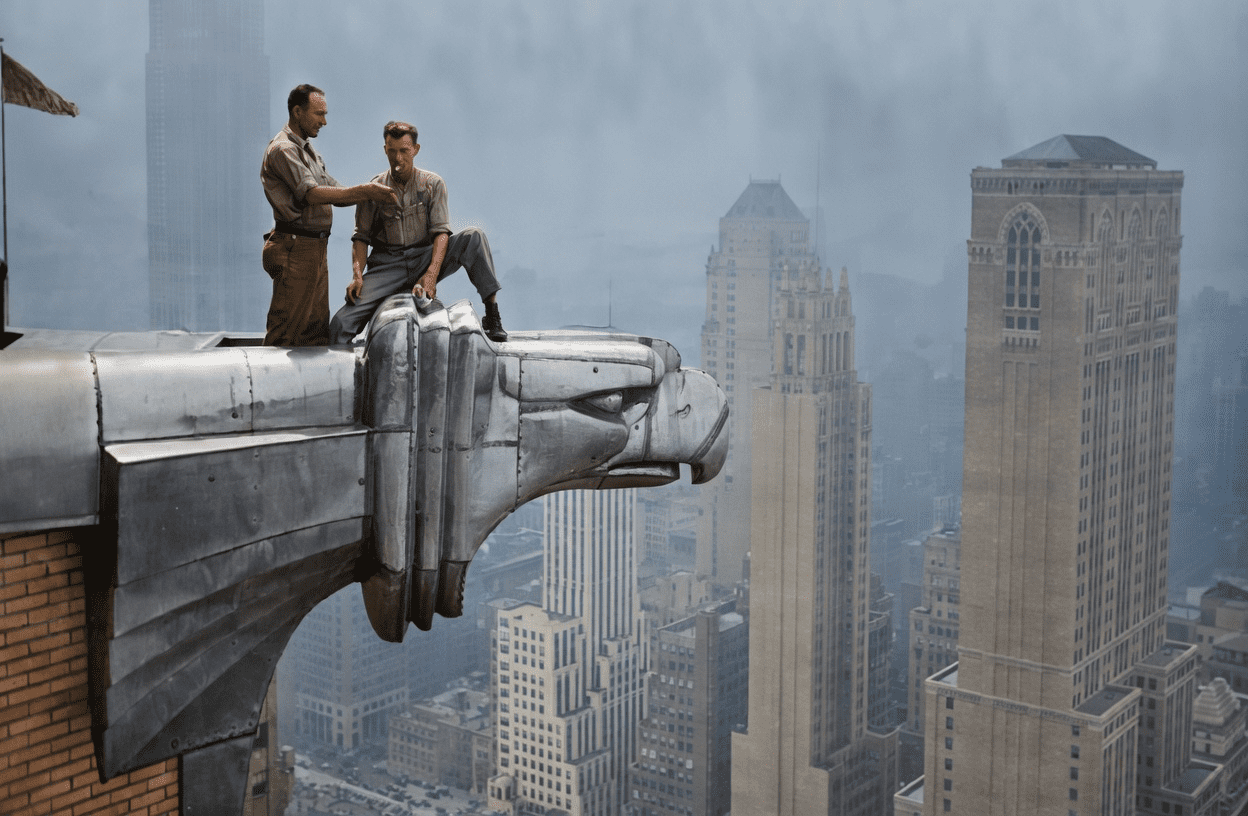
The building’s appearance was no accident. Van Alen used the Art Deco style but filled it with details that directly referenced automobiles. The ornaments mirrored elements of Chrysler cars—from hubcaps to radiator grilles.
This created an additional effect. The building functioned as a visual brand statement, even without traditional advertising. People looked up and saw not just another skyscraper, but a coded message about industry, speed, and technology.
Consequently, the Chrysler Building became something more than an office building. The structure turned into a sign of the times, where architecture spoke the language of business.
A Symbol of an Era — Between Triumph and Crisis
The Chrysler Building opened at a moment when economic reality was shifting drastically. The 1929 stock market crash had already hit businesses, companies were cutting costs, and the real estate market was starting to sag. Against this backdrop, the new skyscraper looked almost like a challenge to circumstances—too expensive, overly ambitious, and far too visible.
Office occupancy was initially disappointing. Some companies were simply not ready to rent space at previous rates. But here, another trait of the project emerged: it wasn’t designed for a quick return. For Chrysler, this story wasn’t just about fast profit. It was more important where he would stand in the city’s hierarchy, and accordingly, what mark he would leave on Manhattan’s skyline.
A parallel problem arose—a conflict with architect William van Alen. After construction was completed, a dispute over the fee broke out between the parties. Chrysler suspected financial impropriety and refused to pay for the work in full. For the architect, this resulted in an effective exit from the big game: he never received another major commission.
The irony is that the building itself has survived both crises and changing eras. It hasn’t disappeared from the skyline, hasn’t lost its recognizability, and has gradually established itself as one of the symbols of Manhattan. What initially looked like something far too pompous has over time come to be seen as a perfect capture of the spirit of the age.
To sum up, the Chrysler Building tells a story of ambition that went beyond business logic. It’s also about an entrepreneur who decided to play by his own rules, even if it meant going against the market.