

The Roosevelt Hotel has been a New York City landmark for over a century. Opened in 1924 to serve passengers using Grand Central Terminal, this iconic hotel has weathered the storms of Prohibition, the Great Depression, and World War II, evolving into a beloved retreat for many. We’ll dive deeper into its history and notable features right here on manhattan1.one.
The Hotel and the Prohibition Era
The Roosevelt Hotel, named in honor of former US President Theodore Roosevelt, officially opened its doors in 1924. This was just four years after the start of Prohibition, the 13-year national ban on alcohol in the United States. While Prohibition forced some city hotels to shutter, the area around Grand Central Terminal flourished in the post-war years, attracting commercial developers.
Although the four-star Roosevelt wasn’t considered one of New York’s most luxurious hotels, it was a towering presence in Midtown Manhattan, rising 19 stories into the sky. Due to the alcohol ban, the Roosevelt broke with tradition, featuring ground-floor retail shops instead of the typical lounges and bars. It was also one of the world’s first hotels to offer pet-sitting, childcare, and on-site medical services.
In 1929, alcohol was completely removed from the menu. Yet, the Roosevelt became a magnet for tourists and music lovers. Amid the height of Prohibition, the famous bandleader Guy Lombardo and his orchestra, His Royal Canadians, gave their first performance at the hotel’s Roosevelt Grill and continued to entertain fans for the next three decades. Their rendition of the Scottish tune “Auld Lang Syne,” about old friends and love, became a New Year’s Eve tradition. Variety magazine later dubbed Lombardo the “only Canadian who ever created an American tradition,” solidifying his legacy at the Roosevelt.
Major Transformations
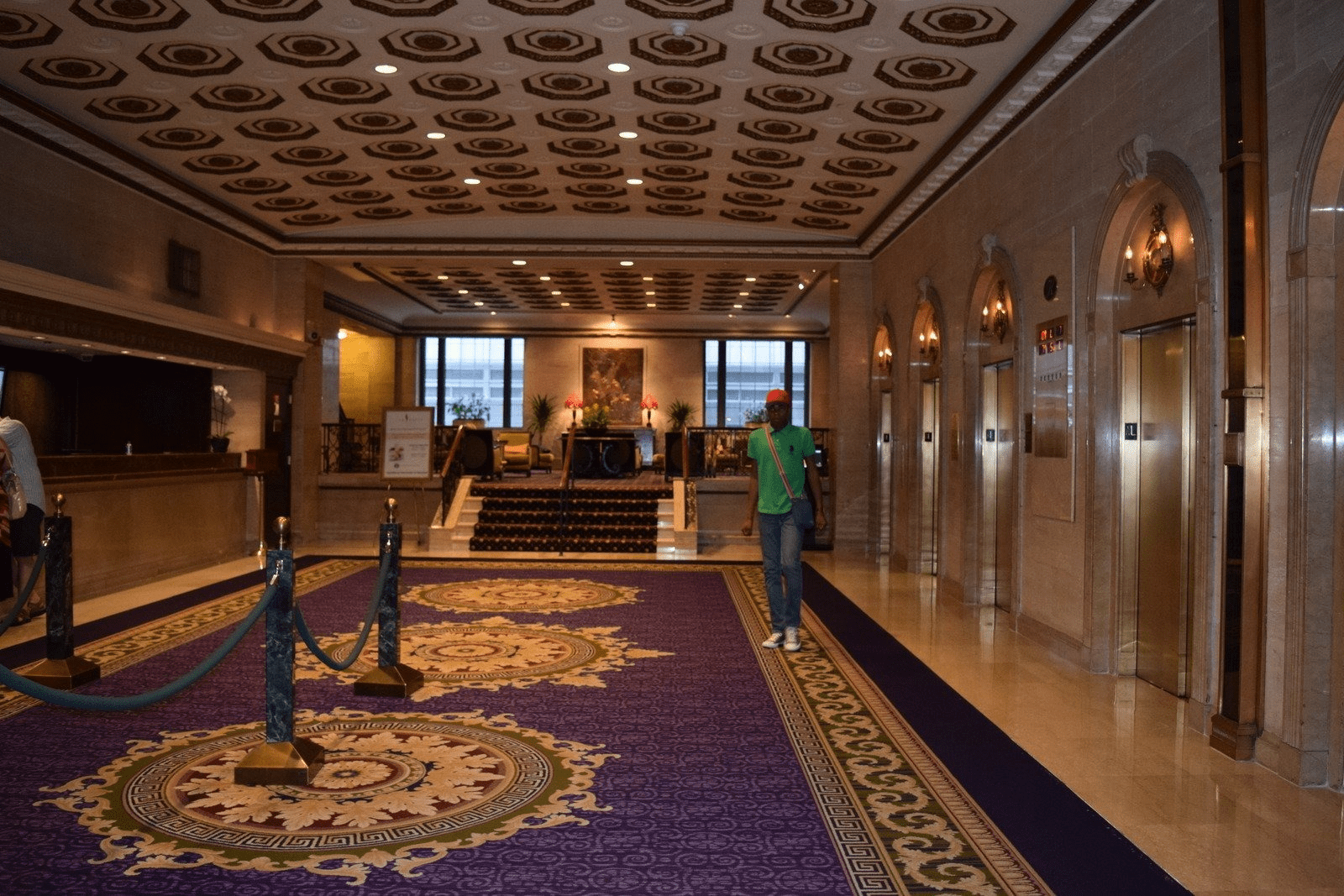
In 1943, hotel magnate Conrad Hilton acquired the Roosevelt and merged it with The Plaza, taking up residence in the Presidential Suite. This purchase made Hilton the first American hotel chain with a presence on both coasts. Four years later, the Roosevelt made history again by becoming the first hotel to install a television in every guest room. Hilton’s ownership of the Roosevelt ended in 1956 when the company was forced to sell the property as part of an antitrust lawsuit filed by the government.
The Roosevelt became a political hub in the mid-20th century, serving as the presidential campaign headquarters for Republican candidate Thomas Dewey from 1944 to 1948. Dewey famously conceded his election loss right there in the hotel. The Roosevelt continued to host other high-profile political events in the following years.
Starting in the 1970s, the hotel, with its neoclassical façade and vintage-style interior, became a favourite filming location for Hollywood studios. The French Connection (1971), Presumed Innocent (1990), and Maid in Manhattan (2002) are among the more than a dozen films shot on its premises.
Throughout its history, the hotel changed hands several times until Pakistan International Airlines (PIA), backed by Saudi Prince Khalid bin Faisal Al Saud, took over management from the New York real estate family. The deal included an option for PIA to purchase the hotel for $36.5 million within 20 years, an option the airline exercised in 2000. Considered a national asset of the Pakistani government, the Roosevelt became a favourite stay for Pakistani prime ministers and other high-ranking officials visiting New York. In the late 1990s, the hotel’s Grand Ballroom hosted a concert by Junoon, Pakistan’s biggest rock band.
From Peak to Plunge
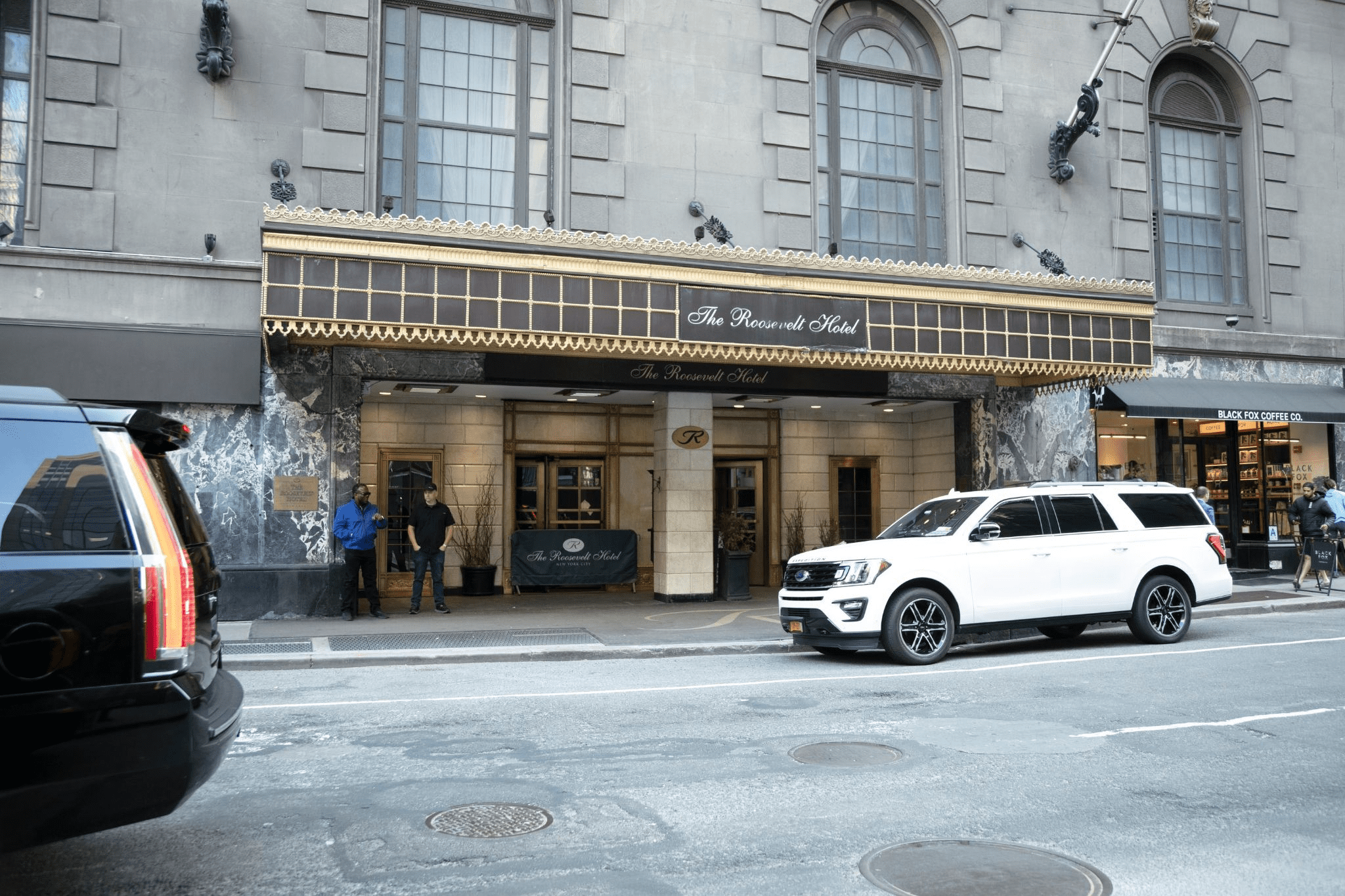
In recent decades, the Roosevelt Hotel experienced financial difficulties. In 2020, citing the unprecedented situation caused by the pandemic, it closed its doors to guests. A new start came in 2023 with a $220 million, three-year lease agreement signed with New York City. The city planned to use the hotel as a migrant shelter and processing centre. However, the lease proved to be only a temporary measure for the struggling hotel. In February 2024, Mayor Eric Adams announced that the city was terminating the lease, bringing an end to an entire era in New York history.