

The history of pawnbroking in the United States dates back to the 19th century. This era saw the first professional pawnshops open in major cities along the East Coast. However, before urbanisation and the establishment of the capitalist economy, there wasn’t a significant need for pawnbrokers. With a general shortage of hard currency, Americans living in small, close-knit communities often acted as lenders for one another. Neighbours commonly used livestock or farm equipment as collateral for loans, especially when taxes were due.
Because they were constantly in contact with people carrying personal property, tavern, and hotel owners also served as informal moneylenders. They would accept goods in exchange for lodging, food, and drinks, according to manhattan1.one.
The Demand for Credit
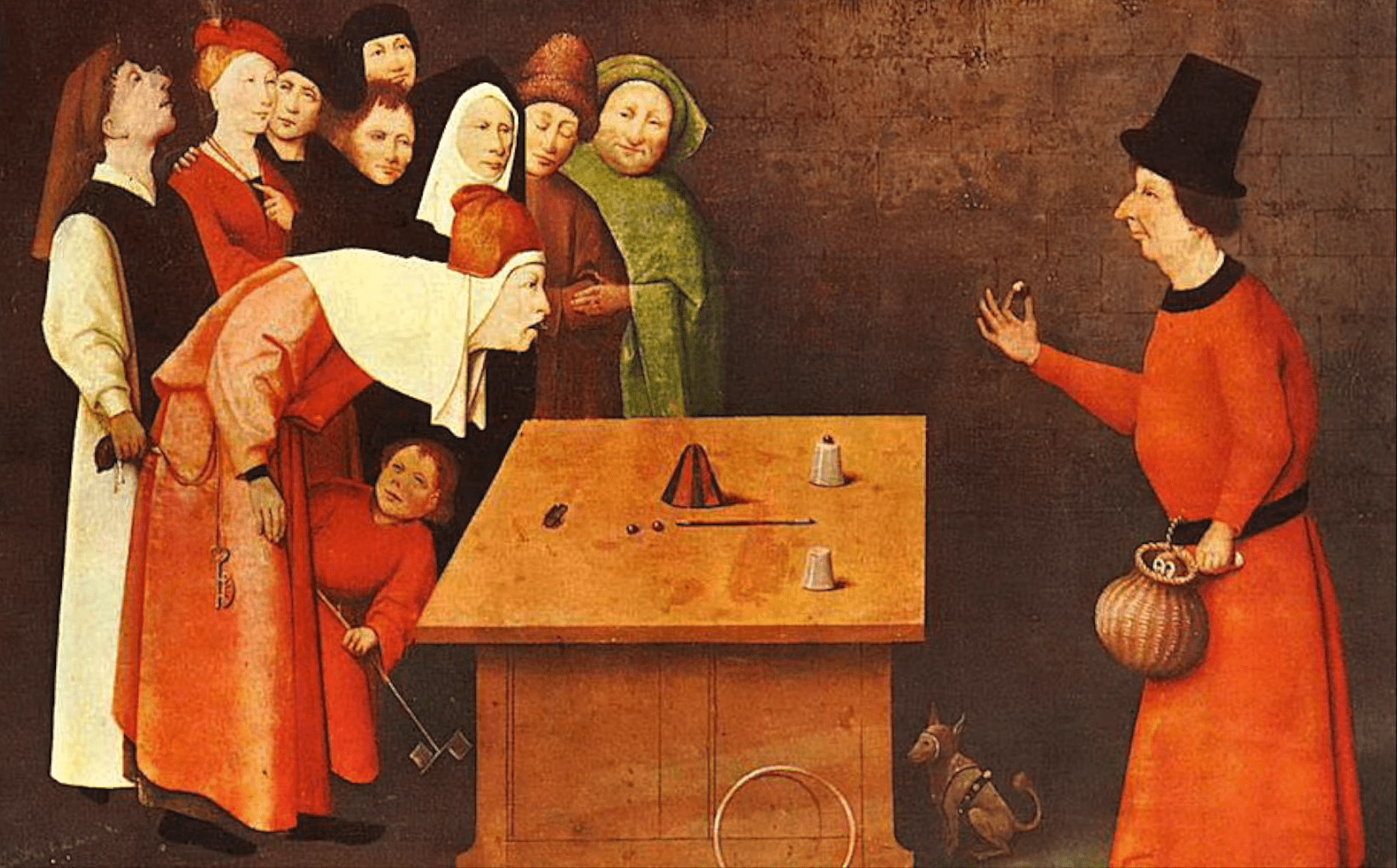
Before the 1830s, credit was not available to everyone. It was exclusively for the wealthy, who enjoyed the privileges of extended commercial networks built on social and family ties. These individuals would borrow large sums from each other and essentially run their businesses on credit. They also used professional brokers who, unlike informal moneylenders, offered financial services to entrepreneurs. These brokers provided a range of services to the elite, whose business needs to be shifted with time and circumstance. Well-connected and highly skilled in commercial matters, early brokers sold goods on commission, recruited captains, crews, and vessels for trade voyages, linked investors, and lent money—all with integrity and confidentiality.
At the turn of the 18th and 19th centuries, successful merchants and businessmen continued to use and profit from extensive credit networks. However, the poor and middle classes, who desperately needed access to credit themselves, did not share the same privileges within these exclusive circles and were left to fend for themselves. It wasn’t until the 1810s that several functional savings banks were established to hold surplus income that could only be withdrawn in exceptional circumstances, such as to pay for medical services or funerals. The banks’ organisers intended for these institutions to be didactic, teaching working people to manage their own money under the guidance of those they claimed were more responsible and respectable: the elite.
The Rise of the Pawnbroking Business
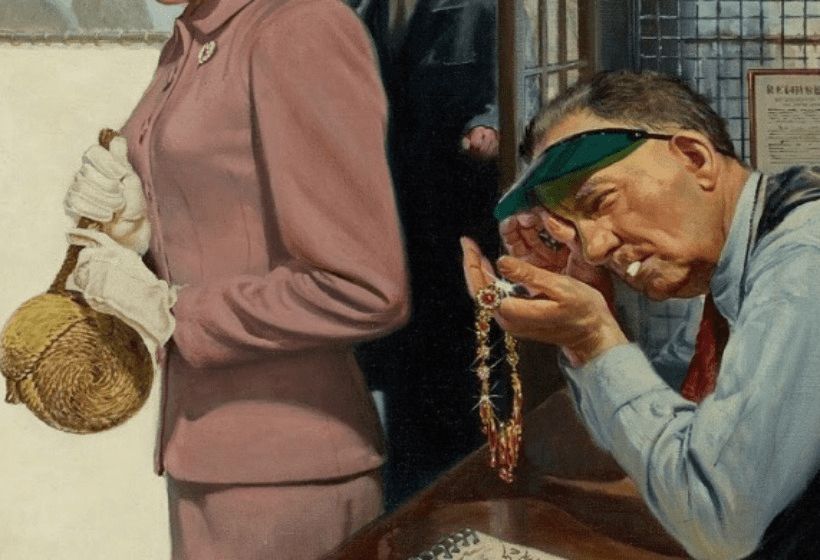
As capitalism took root in American cities, the pawnbroking business flourished. In fact, these two institutions often went hand-in-hand. The profound economic, demographic, and cultural shifts of the early 19th century fuelled the growth of both capitalism and the proliferation of pawnshops. Immigrants from abroad and from rural areas flooded East Coast cities in search of work and a better life. This constant stream of the unemployed created a labour reserve, allowing industrial capitalists to pay the lowest possible wages, thereby expanding the class of the working poor. And it was these people who became the pawnshops’ regular clientele.
Pawnshops issued loans for terms ranging from a few weeks to several months, usually in small amounts that did not exceed a few dollars. By obtaining short-term loans, pledgers could supplement their meagre wages. Pawnbrokers thus played a crucial role in the development of industrial capitalism, providing a much-needed form of credit that was unavailable anywhere else, including banks.
It is known that in 1828, New York pawnshops conducted over 181,000 transactions that year, which was nearly one pawned item for every man, woman, and child living in the city at the time. There is no denying that capitalism effectively lined the pockets of selected entrepreneurs. But they were far fewer than the numerous unfortunates recorded in the pawnbrokers’ ledgers.
As the country expanded westward in the 1840s and 1850s, pawnshops began appearing in cities like Pittsburgh, Cleveland, and Chicago. Typically, pawnbrokers clustered on the outskirts of commercial corridors and were often located near complementary businesses such as saloons and brothels.
What Did Pawnbrokers Accept?
More often than not, the pledgers were women, as they had to keep their families afloat by balancing the budget and showing resourcefulness. They saved money on clothing by patching and mending it and buying used items. Women also consumed less food and cooked with lower-quality products. To cover necessary expenses, they turned to pawnshops—their last resort—and had to choose which family possessions to pledge, be it a precious heirloom or a decorative trinket. If the pawnshop considered the item to have resale value, it was accepted as collateral. The 1838 ledger of pawnbroker John Simpson shows that women most frequently pledged skirts, shawls, linens, kitchenware, jewellery, and family Bibles.
Due to the prevalence of pawnshops and the essential services they provided to the working poor, their owners were often viewed as cruel and greedy. Reformers, politicians, and businessmen condemned pawnshops, claiming they engaged in negative and marginal activities. Very typically, borrowers were blamed for being poor money managers. Over time, the profile of pawnbrokers changed slightly when Irish and African Americans joined the business.
Nearly two centuries after their first appearance in the United States, the symbol of three spheres, taken from the coat of arms of European banking families, still hangs on the doors of many pawnshops. This speaks to the enduring need among Americans for small, urgent, and short-term loans.
An Old Manhattan Pawnshop
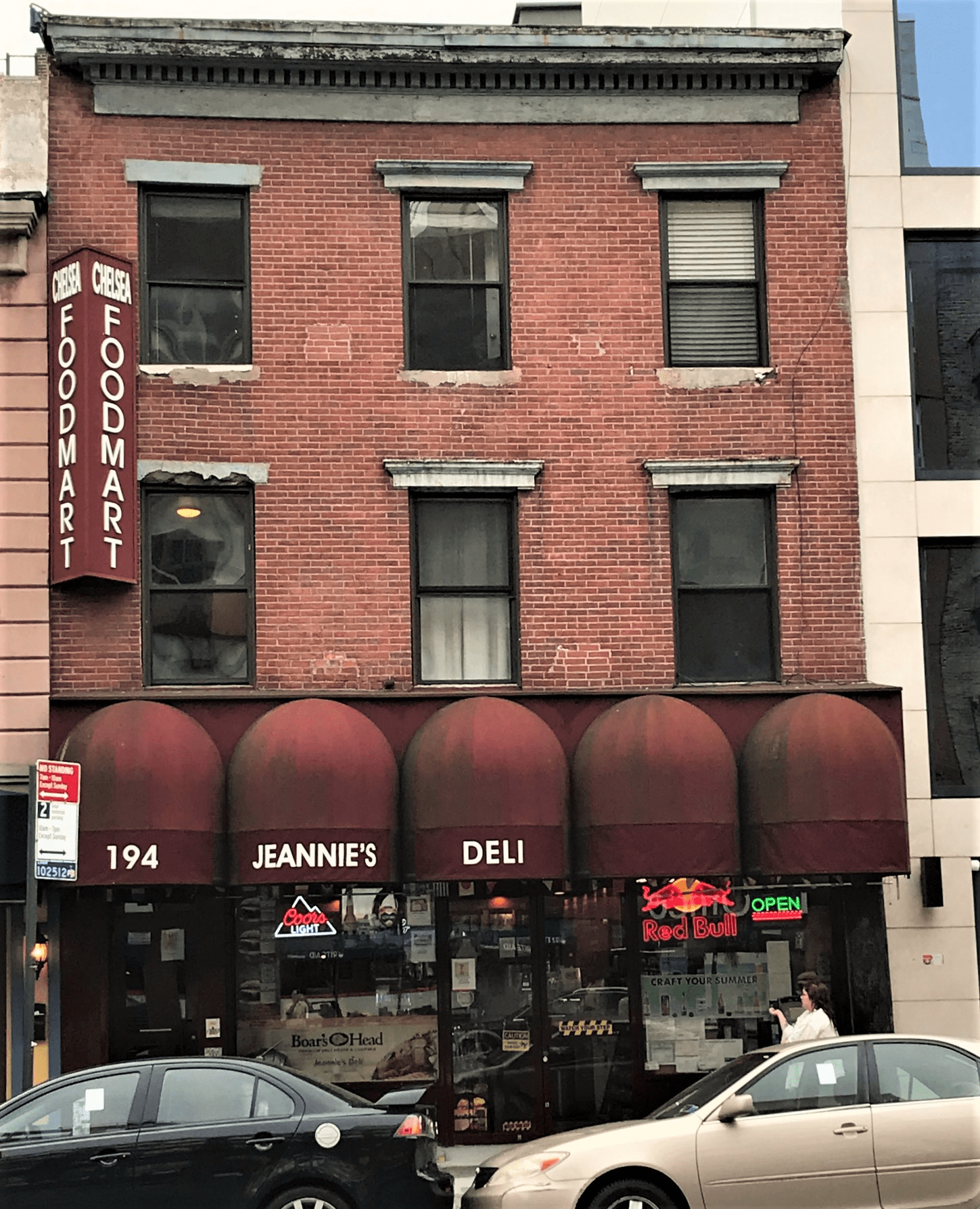
In the 1840s, 8th Avenue developed as a commercial street. Among other buildings was No. 194—a three-story brick structure. By 1850, John Hinton and his son John, who lived nearby on 20th Street, had opened their pharmacy on the ground floor. In the 1850s, the upper floor of the building belonged to shoe merchant Louis Lang. Hinton’s pharmacy remained there until the 1860s. In 1870, Henry Macalennan purchased the building and moved his pawnshop there. It’s important to note that the entrepreneur opened his first pawnshop in 1844 at 52 Mulberry Street. He, like other brokers, knew he had to be cautious with the goods he accepted, as thieves regularly tried to pawn stolen items. On December 21, 1875, Officer Beveridge was maintaining order at McLennan’s pawnshop.
The New York Times on September 25, 1880, reported that a young woman, elegantly dressed in a dark blue suit trimmed with white lace, entered Henry Macalennan’s pawnshop that morning. She placed a man’s diamond pin on the counter and asked the owner how much he was willing to lend for it as collateral.
When he offered no more than $20, she was outraged, claiming it was a genuine diamond. Her behavior aroused Henry’s suspicion, and he detained the woman under some pretext. Meanwhile, he sent a boy to the police station on 20th Street. When she could not explain to the officer where she got the pin, she was arrested. Meanwhile, John Callaway had reported the theft of a pin at another police precinct. Callaway was brought to the 20th Street police station, where he identified both his pin and the female thief. During questioning, the woman was identified as Emma Fuller. She had married a man against her parents’ wishes; he turned out to be worthless and led her into a life of shame. Emma attempted suicide in her cell by hanging herself with a silk scarf but was rescued and placed under strict guard.
Henry Macalennan’s pawnshop was so profitable that when a developer approached him with an offer to buy the property, he flatly refused. Henry died in 1913. The business passed to his son, Arthur. Around 1920, a man walked into the pawnshop and pledged his coin collection. Realizing that he had a rare item on his hands, Arthur sent it to the New York Numismatic Society, but they replied that they had never seen such a coin. Macalennan valued it at $500 and displayed it in the window. Macalennan’s pawnshop remained in the building on 8th Avenue throughout the Great Depression. By 1984, a shop called Frames By You was located there. Today, the space in the historic building that once housed the pawnshop is occupied by a deli.